Brad here. I’ve always been an unabashed fan of Joyce Carol Oates’ writing. Her meticulous and lyrical prose. Her rich characters. The powerful themes she works with.
So imagine my surprise when I saw this series of tweets from her today:

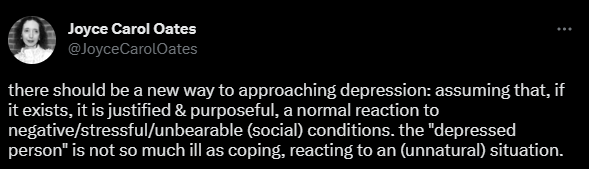
Picture for a moment, if you will, someone suffering from unipolar or bipolar depression, struggling with suicidal thoughts, and then logging on to see their favorite author call them “weak” and tell them they shouldn’t talk about it to others. That it might not even be real.
Oates’ stance here isn’t just ignorant. It’s actively harmful. 70% of all suicide victims have been diagnosed with unipolar or bipolar depression. I’d wager the other 30% are undiagnosed, but still suffering. Spreading this kind of arrogant, pompous, unempathetic misinformation could discourage someone who needs help from seeking it out, if not outright push someone over the edge.
And the real problem? Oates’ opinion is not in the minority. This is, unfortunately, how most of the general population view mental illness. It’s “not real.” You can just “snap out of it.” People saying “they don’t believe that’s how mental illness works.”
They must not believe water is wet or that gravity pulls things to the ground. Because mental illness – including all its weird, ugly, debilitating, life-wrecking symptoms – is a scientific fact that has thousands upon thousands of studies supporting it over several decades.
We go into this type of Arrogant Ignorance, as we call it, in Episode 5: Depression and Episode 6: Public Perception of the podcast. The stigma against and ignorance around mental illness is very real. Those of us who suffer from these diseases – and that’s what they are, no different from diabetes or asthma – face it every. Single. Day. We face it in the workplace. We face it in our relationships. We face it with friends who stop returning our calls and emails. We face it with strangers who learn of what we have, refuse to understand it, and form awful opinions of what we’re capable of. There isn’t a day that goes by we don’t face this. It makes the fight hard. So very hard.
But that’s why we have to keep fighting. Keep educating. Keep calling out people like Oates who refuse to educate themselves and believe their misinformed opinions are fact.
Don’t stop fighting, folks. Never stop fighting.
Brad C. Hodson
If you or someone you love is considering suicide, please call the Suicide and Crisis Lifeline at 988 on your cell phone. Know that you’re not alone and there is help.
 BatShit
Leave a comment